
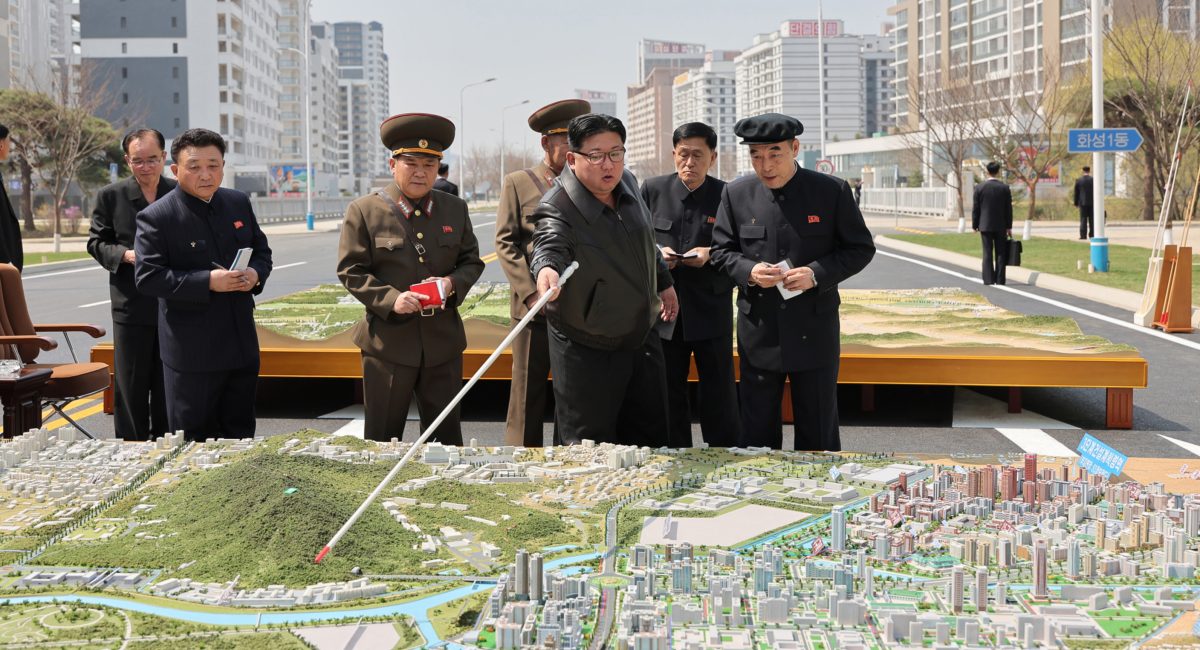
Kim Jong Un Inspects Hwasong Area Construction Project as Part of Pyongyang’s Urban Development Plans
On January 10, Kim Jong Un, the General Secretary of the Workers’ Party of Korea and President of the State Affairs of the Democratic People’s Republic of Korea, conducted a field visit to the Hwasong area, where a major four-stage construction project is nearing completion. The project is part of a larger effort to transform Pyongyang into a world-class, modern city, and it emphasizes the construction of 50,000 flats, with 10,000 units in the final stage currently at 99% completion.
Accompanied by key government officials, including Premier Pak Thae Song and Ri Il Hwan, Secretary of the Central Committee of the WPK, Kim Jong Un reviewed the layout of the buildings and studied a bird’s-eye map showing the development. This project aligns with the 2025 capital city construction plan approved by the Eleventh Plenary Meeting of the Eighth Central Committee of the WPK.
Kim Jong Un noted the impressive progress in the architectural field, which has seen remarkable advances under the current leadership. He stressed that the construction of the Hwasong area, designed to address the housing problem in the capital city, has evolved into a full-fledged urban administrative district with both political and economic functions.
The leader expressed satisfaction with the integration of architectural aesthetics and functionality, which he praised for its ability to combine urban formation with modern architectural elements. The development of the Hwasong area, he stated, would become a model for future urban construction across the country and would lead the way in terms of architectural and urban planning standards.
Kim Jong Un’s emphasis on the significance of this project reflects his broader vision for the country’s development. He described the transformations taking place in Pyongyang as “eye-opening” and as a clear representation of the country’s progress. He stressed that the rapid pace of change in the capital city symbolizes the dynamic advance of the Korean revolution, noting that such developments should be seen as a regular feature of Korean-style socialism.
While inspecting the newly built Saeppyol Street, Kim Jong Un expressed his pride in the capital’s transformation, which he views as a manifestation of socialist civilization. He highlighted that the city’s construction is part of a larger cultural and ideological goal to build a highly civilized state.
Kim Jong Un concluded his visit by reaffirming that construction projects should never be subject to self-congratulation or complacency. Instead, he emphasized the need for constant innovation in architecture to align with contemporary ideologies and cultural developments. He expressed his belief that the ongoing projects would serve as monumental edifices of the times, symbolizing the country’s progress and the builders’ contributions to the nation’s history of prosperity and development.
Leave a Comment