
How Carv Helped Me Break Through My Skiing Plateau
For nearly 30 years, I’ve been stuck on what skiers call the “intermediate plateau.” I can confidently handle groomed blue runs, but black diamonds? They’ve always filled me with dread—not because I doubt I’ll survive, but because I fear the loss of dignity along the way.
That changed when I tried Carv, a wearable coaching system that gave me the feedback I desperately needed—without the pressure of a human instructor.
The Problem: Comfortable But Stuck
Like many recreational skiers, I only hit the slopes once a year for about six days. That’s enough to stay safe and have fun, but not enough to progress. I’d long accepted that my technique would never improve significantly—especially after traumatic childhood ski lessons in the French Alps left me wary of formal instruction.
Life on the plateau was comfortable. But it was also limiting. Double black diamonds remained off-limits, and even steep blues made me tense up, forcing awkward “shame-skids” instead of clean turns.
Enter Carv: Real-Time Coaching Without the Pressure
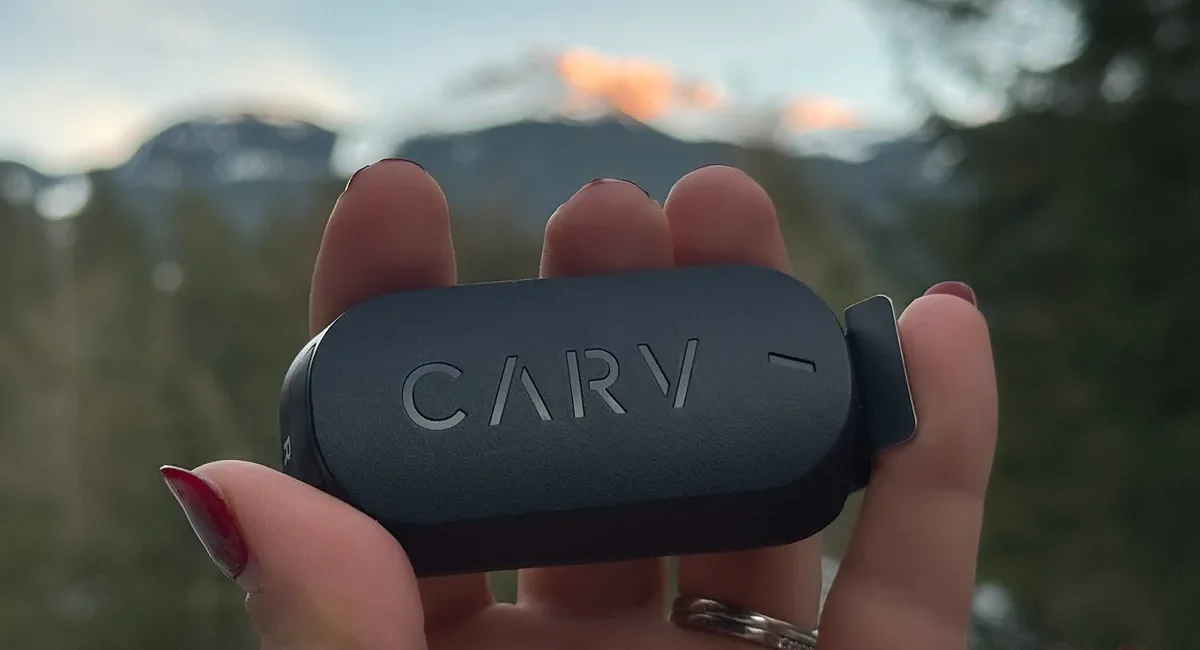
Carv consists of two small sensors that clip onto your ski boot power straps. Priced at $250 (plus a subscription), they track foot movement and sync with a smartphone app to deliver instant analysis—and even real-time audio coaching through your headphones.
At first, I was skeptical. Could a gadget really replace a good instructor? But as co-founder Alex Jackson explained, Carv isn’t meant to replace humans—it’s designed for skiers like me who want feedback without sacrificing time on the slopes with friends or reliving ski-school trauma.
“Even tiny bits of feedback, given fast and in real time, can help change little things,” Jackson told me. “If you can just change one thing, you’ll unlock a totally new sensation.”
Testing Carv in Whistler
I tested Carv during a six-day trip to Whistler. On day one—despite rain and slush—I scored a Ski IQ of 111 (“Peak Pioneer”). Carv’s proprietary metric rates skiers from 80 (beginner) to 170+ (Olympic level), with 100 being average.
The app quickly identified my weak spot: turn shape. Instead of carving smooth C-shaped arcs, I was forcing early turns, creating jagged angles in the snow. Worse, I turned left far more smoothly than right—a flaw I’d never noticed before.
But here’s where Carv shines: it didn’t just point out problems. It offered solutions.
From Data to Real Improvement
Each evening, I watched short tutorial videos and reviewed drills. The next morning, on an empty green run, I focused solely on finishing my turns before starting new ones. Immediately, my Ski IQ jumped to 116.
More importantly, I felt the difference. By completing each turn fully, I could shift weight more naturally to my outside ski, engage my edges better, and keep my upper body stable. It felt fluid—almost effortless.
Over the week, I toggled between Carv’s modes:
- “Learn” mode gave tips while I rode the lift.
- “Train” mode used escalating beeps to reward clean turns in real time.
This gamification kept me engaged, especially on solo runs. I stopped fixating on my overall Ski IQ and instead targeted specific skills—like initiating turns with grip or steering with my legs.
By day five, I hit a personal best: Ski IQ 118 on a black diamond run. Thanks to a recent algorithm update, Carv now rewards performance on steeper terrain—so my score reflected both skill and courage.
Beyond the Numbers: Rediscovering Joy in Skiing
The real win wasn’t the number—it was the feeling. For the first time in years, I skied with intention. My brother, a far better skier, noticed the change immediately. “You’re leaning forward more,” he said. “You look like you belong on this slope.”
Carv had given me the confidence to apply advice I’d ignored for years. And in doing so, it reignited my love for the sport.
As Jackson reminded me later: “Skiing is one of those sports where the better you get, the more fun it gets.” He was right.
Final Thoughts
Carv won’t turn you into an Olympian overnight. But for intermediate skiers stuck in a rut, it offers something rare: personalized, judgment-free coaching that fits into your existing routine.
After my trip, I found myself watching ski tutorials online, dreaming of more mountain days, and yes—even considering a private lesson.
Because now I know: the intermediate plateau isn’t permanent. With the right tools—and a little focus—you can push past it. And maybe, just maybe, ski that black diamond with speed, style, and zero shame.
READ: Why You Should Buy a Dehumidifier—Especially in Damp Climates
Leave a Comment