
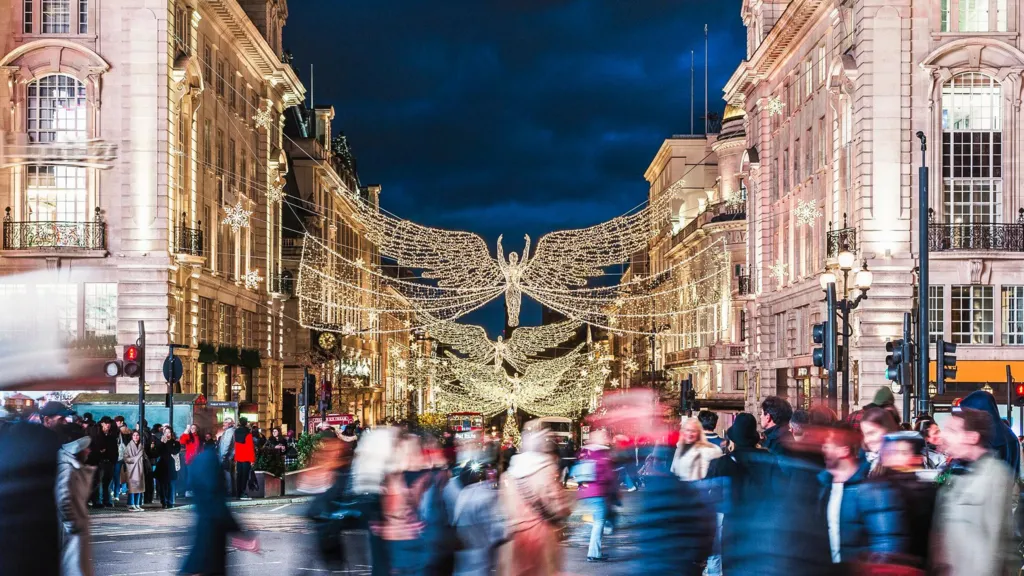
London’s West End Sees Festive Footfall Surge to 2020 High
London’s West End enjoyed a significant rebound in festive footfall during December 2025. Visitor numbers reached their highest level since 2020, according to new data. The Heart of London Business Alliance reported a 19% increase compared to December 2024. The district includes major areas like Piccadilly and Leicester Square. Visitors also stayed longer, with average dwell times rising by 42 minutes. This surge highlights the growing strength of the area’s “experience economy.” The figures signal a strong recovery from the pandemic’s impact. Despite broader retail challenges, the West End outperformed national trends. The success underscores its enduring appeal as a global destination.
Detailed Footfall and Dwell Time Data
The Heart of London Business Alliance provided specific metrics. Footfall in December 2025 was 20% above the 2022-2024 average. The period from December 15 to 29 saw an even stronger 35% increase over that post-pandemic baseline. The average dwell time across the district rose to two hours and 38 minutes. Sundays and Mondays experienced the biggest increases in visitor duration. This suggests trips were less about frantic shopping and more about leisure. The longer stays likely benefited restaurants, theaters, and attractions beyond shops. The data reflects a strategic shift towards creating engaging day-out experiences.
Economic Impact and Strategic Importance
The HOLBA district is a vital economic engine. Although it represents about 12% of the wider West End, its contribution is massive. It contributes over £12.8 billion annually to the UK economy. The area supports more than 117,000 jobs. It attracts approximately 83 million visitors per year. This festive performance is therefore critical for national retail and hospitality sectors. Deputy CEO Mark Williams linked the success to the “experience economy.” He noted the area’s ability to attract people through more than just shopping. This model appears to be yielding clear results despite economic headwinds.
Sector Insights and the Experience Economy
The West End’s strategy focuses on events, dining, and entertainment. Theatres, casinos, light displays, and seasonal markets create a draw. Simon Thomas of The Hippodrome Casino noted the demonstrated confidence in central London. He called the West End one of the capital’s great economic engines. This approach differentiates it from pure retail destinations struggling with online competition. By offering something that cannot be replicated online, the area maintains its footfall. The increased dwell times prove visitors are engaging with multiple offerings. This creates a more resilient economic model for urban centers.
Challenges and Future Pressures
Despite the positive figures, business leaders acknowledge ongoing pressures. Mark Williams cited rising business rates and operating costs as significant concerns. These factors could threaten the viability of some establishments. The need to continuously invest in experiences also requires capital. Maintaining the area’s appeal demands constant innovation and high standards. Competition from other London districts and out-of-town centers remains. The West End must balance its heritage with modernity to keep attracting diverse crowds. The festive success provides momentum, but long-term challenges persist.
Broader Context for UK Retail and Tourism
The West End’s performance contrasts with some wider UK retail trends. It shows the power of concentrated destination marketing and investment. Other city centers may look to replicate aspects of its experience-led model. The data also suggests a robust return of tourism and domestic day-trippers. This is positive for London’s post-pandemic recovery narrative. The increase in Sunday and Monday visits indicates changing leisure habits. People are spreading their trips across the week, aiding congestion management. This pattern helps businesses achieve more consistent revenue.
London’s West End festive footfall surge is a welcome sign of vitality. The 19% year-on-year increase and longer dwell times validate its experience-led strategy. The district remains a crucial economic hub, supporting billions in economic activity. Success stems from offering theater, dining, and events alongside shopping. However, rising costs present a real threat to this ecosystem. The challenge is to sustain investment and innovation. If managed well, the West End can continue bucking broader retail trends. Its performance offers a blueprint for other urban centers seeking to thrive in the experience age.
Leave a Comment