
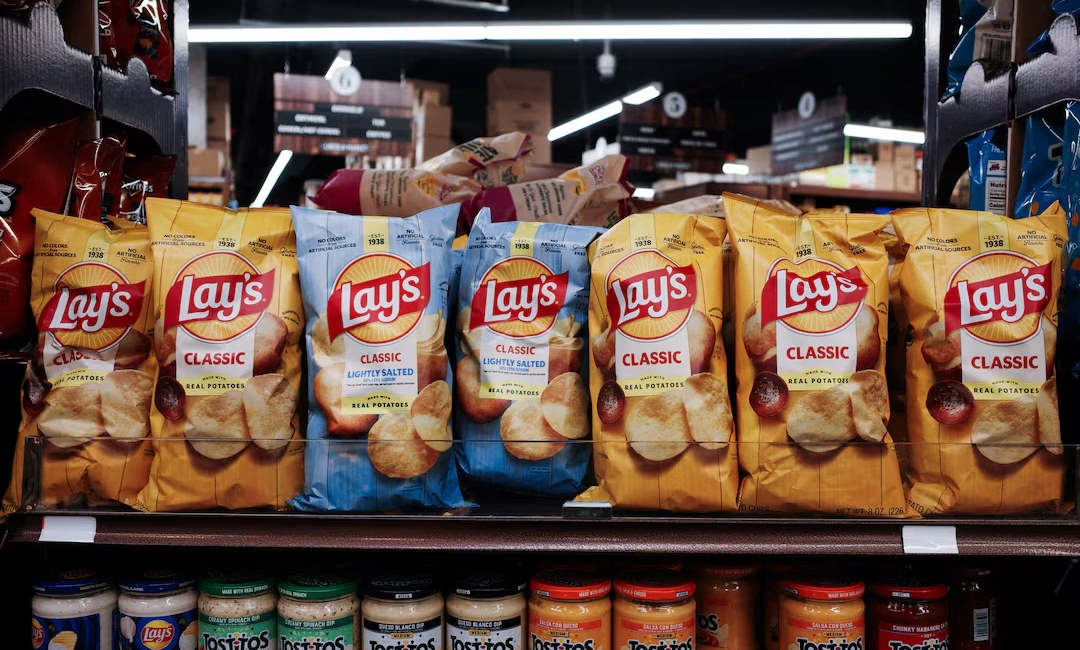
PepsiCo to Cut Prices on Lay’s and Doritos After Consumer Pushback
PepsiCo will cut prices on core snack brands like Lay’s and Doritos by up to fifteen percent. This decision follows a significant consumer backlash against repeated price hikes. The snacks and beverage giant announced the price cuts alongside strong fourth-quarter results. Consequently, this move aims to safeguard market share as inflation strains household budgets. PepsiCo Foods US CEO Rachel Ferdinando stated the company listened to consumers feeling financial strain. The new, lower prices will appear on shelves this week.
The company is also betting on portion control to drive growth. CEO Ramon Laguarta noted over seventy percent of its US food line is single-serve. This strategy responds to growing use of appetite-suppressing GLP-1 drugs. Meanwhile, PepsiCo reported quarterly revenue of $29.34 billion, beating estimates. It maintained its annual earnings growth forecast. Shares rose nearly four percent on the news. These price cuts represent a strategic pivot after years of aggressive pricing eroded volume, particularly in the key North American market.
Responding to Consumer Pressure and Market Realities
PepsiCo’s price cuts directly address widespread consumer frustration. Years of inflation and delayed government benefits have made essentials less affordable. Companies like Procter & Gamble and Coca-Cola have also lowered entry price points recently. PepsiCo described affordability as the “biggest cause for friction” for low and middle-income shoppers. Therefore, these targeted price cuts are a tactical retreat to rebuild volume and customer loyalty.
The company calls the reductions “surgical.” They focus on core brands where resistance has been strongest. PepsiCo expects this action will return its North America snacks category to volume growth this year. This is crucial for reversing a sales slump that has attracted activist investor scrutiny. The strategy acknowledges that pricing power has limits, especially for non-essential snack items in a competitive market.
The Portion Control Strategy and GLP-1 Challenge
Beyond price cuts, PepsiCo is emphasizing portion control. CEO Ramon Laguarta identified multi-packs and single-serve formats as critical growth levers. This approach aligns with changing consumption patterns, potentially influenced by weight-loss drugs like Ozempic. As more consumers use GLP-1 medications, demand for large, indulgent packages may decline. Single-serve options offer moderation and convenience.
The company is also refreshing key brands. It focuses on low-sugar and no-artificial-ingredient profiles. This targets younger households with children who prioritize perceived healthier options. Brands like Quaker, Gatorade, and Tostitos will see updated recipes and marketing. Therefore, PepsiCo’s strategy is dual-pronged: cut prices to regain volume and innovate packaging and formulas to stay relevant amid health trends.
Financial Performance and Activist Investor Pressure
PepsiCo’s quarterly results provided room for this strategic shift. Revenue of $29.34 billion exceeded analyst expectations of $28.97 billion. Core earnings per share of $2.26 also edged past estimates. The company reaffirmed its full-year forecast for five to seven percent core EPS growth. This financial stability allows it to absorb lower margins from price cuts in the short term.
Activist investor Elliott Management has pressured the company for months. It pushed for cost-cutting and improved performance after several weak quarters. PepsiCo is now midway through an aggressive cost-reduction plan across its business. The price cuts and volume growth focus likely form part of the response to this shareholder pressure. Investors reacted positively, sending shares up four percent.
Competitive Landscape and Long-Term Outlook
The snack and beverage market remains intensely competitive. Rival Coca-Cola has also adjusted pricing strategies recently. PepsiCo’s price cuts aim to prevent further market share erosion. Its stock underperformed Coca-Cola’s over the past five years, adding urgency to this turnaround effort. Success depends on execution across multiple fronts: pricing, innovation, and productivity.
Analysts note the strong quarter suggests improving trends. David Wagner of Aptus Capital Advisors said execution on innovation and productivity remains key for the stock’s sustained performance. The price cuts are a necessary step, but not sufficient alone. PepsiCo must also continue its brand refreshes and cost discipline to deliver lasting growth and satisfy investors.
A Pivot in Pricing Strategy
PepsiCo’s announcement marks a clear pivot. For years, it relied on price hikes to drive revenue, a strategy that eventually dampened demand. Now, it prioritizes volume and affordability. This reflects a broader recognition that consumer tolerance for price increases has reached its limit in many categories.
The coming months will test this new approach. Will lower prices sufficiently boost sales volume to offset the margin impact? Can portion control and product innovation attract health-conscious consumers? The answers will determine whether this is a temporary correction or a sustainable new path for the snack food giant.
Leave a Comment