
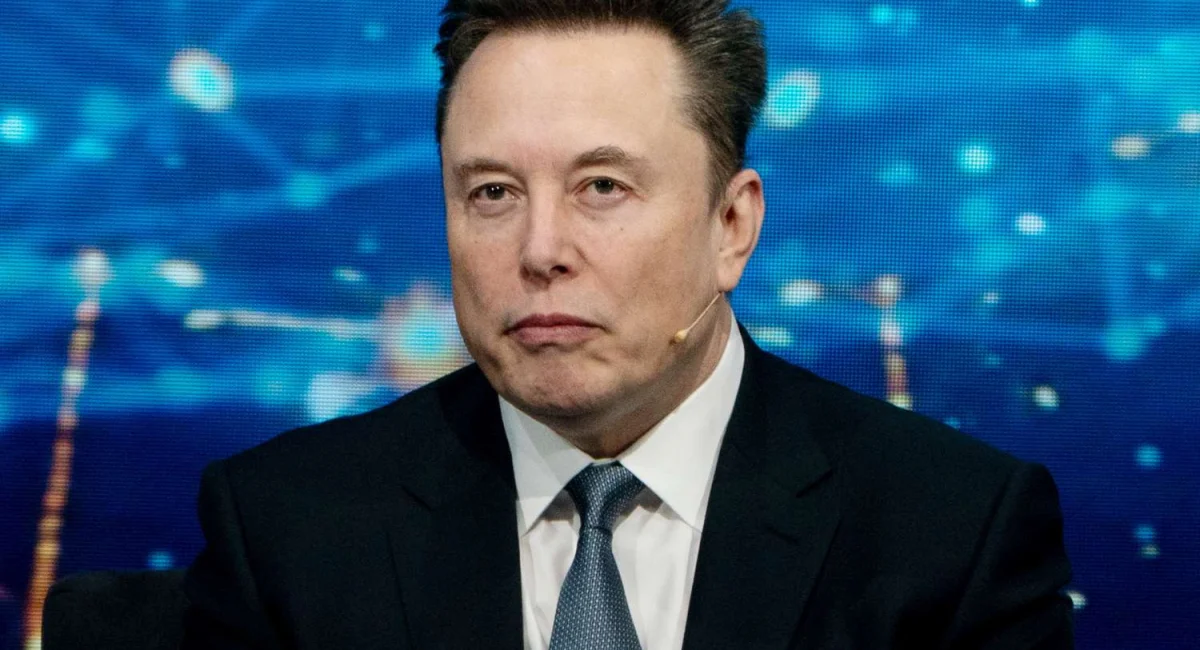
SpaceX Debut Pushes Musk Into Trillionaire Club
Trillionaire club is no longer a theoretical phrase after SpaceX’s record-breaking Nasdaq debut lifted Elon Musk’s estimated fortune above $1 trillion.
Forbes declared Musk the world’s first trillionaire after SpaceX began trading publicly and sharply increased the market value of his ownership stake. The milestone places Musk in a financial category no individual had publicly reached before.
The SpaceX listing was already historic on its own. The company priced its shares at $135, opened around $150 and drew massive demand from investors betting on rockets, satellite internet, space infrastructure and future communications networks.
But the biggest headline was Musk’s personal fortune.
The IPO turned one of his most valuable private holdings into a public-market asset with a live valuation. That shift pushed his estimated net worth beyond the trillion-dollar mark and created a new chapter in global wealth history.
The moment is not only about Musk. It is about how modern markets are valuing technology companies that promise to control future infrastructure. SpaceX is being priced not just as a launch company, but as a business tied to satellites, broadband, national security, artificial intelligence systems and long-term space development.
Quick Facts About the Trillionaire Club Moment
| Category | Detail |
|---|---|
| Person | Elon Musk |
| Milestone | First publicly recognised trillionaire |
| Main trigger | SpaceX Nasdaq debut |
| IPO price | $135 per share |
| Opening price | Around $150 per share |
| Capital raised | About $75 billion |
| SpaceX valuation | Above $2 trillion during trading |
| Forbes estimate | About $1.1 trillion net worth |
| Main wealth driver | Musk’s SpaceX ownership stake |
| Key market theme | Space infrastructure and future technology |
Why Musk’s Wealth Crossed $1 Trillion
Musk’s wealth crossed $1 trillion because SpaceX moved from private-market valuation to public-market pricing.
Before the IPO, SpaceX was already one of the world’s most valuable private companies. However, private valuations are based on limited transactions, funding rounds and investor estimates.
A public listing changes that.
Once shares begin trading, the market creates a visible price for the company. Because Musk owns a large stake in SpaceX, that public valuation directly affects his estimated fortune.
This is why the IPO mattered so much.
Musk did not receive $1 trillion in cash. His wealth is mostly tied to shares, stock options and company stakes. That means the figure can rise or fall depending on market prices.
Still, the trillionaire milestone is historic because it shows how concentrated founder ownership, investor demand and future-facing technology can create wealth at a scale never seen before.
SpaceX Is Being Valued as Future Infrastructure
SpaceX’s valuation shows that investors are not treating it like a traditional aerospace company.
The company is known for rockets, but the market is valuing a wider business. SpaceX operates launch services, supports satellite deployment, runs Starlink and serves government and commercial customers.
This gives it exposure to several powerful markets at once.
Investors are looking at SpaceX as a platform for space access, global communications, defence-linked technology and long-term infrastructure beyond Earth.
That makes the company unusual.
A normal aerospace firm might be valued on aircraft orders, contracts and industrial margins. SpaceX is being valued on a much broader vision: cheaper launches, global satellite broadband, strategic communications and future space-based services.
That vision is what helped turn the IPO into a record-setting market event.
Starlink Is the Key Commercial Engine
Starlink may be the most important part of the SpaceX investment story.
Rocket launches gave SpaceX its reputation, but satellite internet gives it a recurring-revenue model. That matters because public investors often reward businesses that can generate regular payments from customers across large markets.
Starlink can serve homes, businesses, aircraft, ships, remote communities and government users. It also gives SpaceX a direct consumer and enterprise business, not just a contract-based launch operation.
The company’s structure gives it an advantage.
SpaceX can build satellites, launch them on its own rockets and operate the network directly. That vertical control may help the company expand faster and manage costs better than competitors that rely on outside launch providers.
If Starlink keeps growing, it could support a large part of SpaceX’s valuation.
If growth slows, investors may begin asking whether the IPO price was too ambitious.
Why Investors Backed the Listing
Investors backed the SpaceX listing because the company combines proven achievements with enormous future expectations.
SpaceX has already changed the launch industry through reusable rockets. It has built one of the most visible satellite networks in the world. It has secured major commercial and government business.
At the same time, investors believe the largest opportunities may still be ahead.
Those opportunities include global broadband, military and security-related space systems, orbital logistics, satellite data, space-based communications and possible future industries that do not yet exist at scale.
That is the kind of story public markets often reward.
However, it also means SpaceX must now deliver on expectations that are extremely high.
The Public-Market Test Begins Now
The IPO celebration is only the beginning.
As a public company, SpaceX will face a different level of scrutiny. Investors will want regular updates on revenue, margins, costs, profitability, Starlink growth, contracts and long-term capital spending.
This is a major shift from private-company life.
Private companies can focus on long-term goals with fewer public reporting demands. Public companies must satisfy shareholders, analysts and regulators while still building for the future.
For SpaceX, the challenge will be balancing ambition with accountability.
The company’s mission has always involved huge technical goals. But public markets can be impatient when growth slows or costs rise.
That tension will define the next phase of SpaceX’s story.
Why the Valuation Is Under Debate
A valuation above $2 trillion is impressive, but it is also demanding.
At that level, investors are expecting SpaceX to become one of the most important companies in the world. The company must prove that its launch business, Starlink network and future space systems can support such a high price.
The risks are clear.
Rockets are expensive. Satellites require constant investment. Starlink expansion needs infrastructure. Space missions can face delays, failures and regulatory challenges. Competition may also increase as governments and private companies invest more heavily in space.
That does not mean the valuation is wrong.
It means the market has priced in a very successful future.
SpaceX now has to prove that future is achievable.
Musk’s Leadership Is Both Asset and Risk
Elon Musk remains central to the SpaceX story.
Supporters see him as one of the few entrepreneurs who can turn impossible-sounding goals into real businesses. Tesla changed the electric vehicle market. SpaceX changed rocket launches. Starlink brought satellite broadband into wider use.
That track record gives investors confidence.
But Musk’s leadership also brings questions.
He is involved in several major companies, including Tesla, SpaceX, X, xAI and Neuralink. That raises concerns about focus, governance and whether one person can manage so many high-pressure ventures.
Now that SpaceX is public, those questions will become more important.
Investors will watch not only SpaceX’s numbers, but also Musk’s decisions, communication and ability to keep multiple companies moving.
What This Means for Tesla
Tesla remains a major part of Musk’s fortune, but SpaceX’s listing changes the balance.
For years, Tesla was the main public-market company tied to Musk’s wealth. Investors who wanted exposure to Musk’s business vision often focused on Tesla.
Now SpaceX gives the market another direct route.
That could shift attention between the two companies. Tesla is tied to electric vehicles, batteries, autonomy and robotics. SpaceX is tied to rockets, satellites, broadband and space infrastructure.
Both companies have huge ambitions.
Both also depend heavily on investor confidence in Musk’s long-term vision.
The public market will now compare them more closely.
What the Trillionaire Club Means for Global Wealth
Musk entering the trillionaire club changes the way wealth is discussed.
For decades, billionaire status represented the highest level of private fortune. Some individuals passed $100 billion, then $200 billion, but $1 trillion remained outside normal wealth rankings.
That barrier has now been crossed.
The milestone reflects a broader shift in how wealth is created. The largest modern fortunes are increasingly tied to technology companies that control platforms, networks and future infrastructure.
Musk’s wealth comes from electric vehicles, rockets, satellites, software, artificial intelligence and communications systems.
That is different from earlier eras, when huge fortunes were often built through oil, steel, banking, railroads, retail or real estate.
The first trillionaire came from future technology.
The Inequality Debate Will Become Louder
Musk’s trillionaire status will also intensify debate about wealth concentration.
Supporters will argue that the milestone reflects innovation, risk-taking and the creation of companies that changed major industries.
Critics will argue that a fortune above $1 trillion shows extreme concentration of wealth and power.
The debate will be especially sharp because SpaceX operates in strategic sectors. Satellite communications, launch access and space infrastructure affect national security, internet connectivity and future global systems.
That makes Musk’s fortune more than a private financial story.
It is also part of a public debate about who controls the infrastructure of tomorrow.
What Wall Street Learns From SpaceX
Wall Street will study the SpaceX IPO for years.
The listing shows that investors still have appetite for giant technology offerings when the company has a powerful brand, a clear growth story and a founder associated with major industry disruption.
Other private firms may take notice.
Artificial intelligence companies, robotics firms, defence technology groups, satellite companies and advanced computing businesses may see SpaceX as proof that the public market can still support enormous listings.
However, SpaceX’s long-term performance will decide the lesson.
If the stock performs well, more mega-IPOs may follow. If it struggles, investors may become more cautious about paying extreme valuations for future-focused companies.
What Investors Should Watch Next
Investors should now watch execution.
The most important areas include Starlink subscriber growth, launch frequency, government contracts, profitability, operating costs and capital spending.
They should also watch how SpaceX communicates as a public company.
Investors will want transparency around business segments, revenue growth, margins and long-term strategy.
The IPO made history, but long-term value will depend on results.
A rocket launch can create excitement. A public company must keep earning confidence.
Key Takeaways
- Elon Musk has become the first publicly recognised trillionaire.
- SpaceX’s Nasdaq debut pushed his estimated wealth above $1 trillion.
- The company priced its IPO at $135 per share.
- SpaceX opened around $150 per share.
- The listing raised about $75 billion.
- SpaceX traded above a $2 trillion valuation during its debut.
- Musk’s wealth is mostly paper wealth tied to shares and options.
- Starlink is central to SpaceX’s long-term investment story.
- SpaceX is being valued as future infrastructure, not only as a rocket company.
- The IPO gives SpaceX capital but also brings greater public scrutiny.
- Musk’s milestone raises debate about innovation, inequality and market power.
- The next test is whether SpaceX can justify its historic valuation.
Frequently Asked Questions
What is the trillionaire club?
The trillionaire club refers to the new wealth category created after Elon Musk became the first publicly recognised person with an estimated fortune above $1 trillion.
Why did Elon Musk become the first trillionaire?
Elon Musk became the first trillionaire because SpaceX’s public listing lifted the value of his large ownership stake in the company.
What was the SpaceX IPO price?
SpaceX priced its IPO at $135 per share.
What did SpaceX shares open at?
SpaceX shares opened around $150 per share during the Nasdaq debut.
How much did SpaceX raise?
SpaceX raised about $75 billion through the IPO.
What was SpaceX valued at?
SpaceX traded above a $2 trillion valuation during its first day on the market.
Is Musk’s $1 trillion fortune cash?
No. Most of Musk’s wealth is tied to shares, stock options and company valuations.
Why is Starlink important?
Starlink is important because it gives SpaceX a global satellite internet business with recurring revenue potential.
Can Musk lose trillionaire status?
Yes. If SpaceX, Tesla or other major holdings decline in value, Musk’s estimated net worth could fall below $1 trillion.
Why does this milestone matter?
It matters because it shows how technology companies tied to future infrastructure can create wealth at unprecedented scale.
Conclusion
The trillionaire club has begun with Elon Musk.
SpaceX’s record Nasdaq debut turned one of the world’s most valuable private companies into a public-market giant and pushed Musk’s estimated wealth above $1 trillion.
The milestone reflects investor belief in rockets, Starlink, satellite systems and future space infrastructure. It also shows how markets are rewarding companies that appear positioned to shape the next stage of the global economy.
But the achievement brings pressure.
SpaceX must now prove that its valuation is justified. Musk must manage growing scrutiny across multiple companies. Investors must decide whether the space economy can deliver returns equal to the excitement.
For now, SpaceX has done more than launch rockets.
It has launched the world into the trillionaire era.