
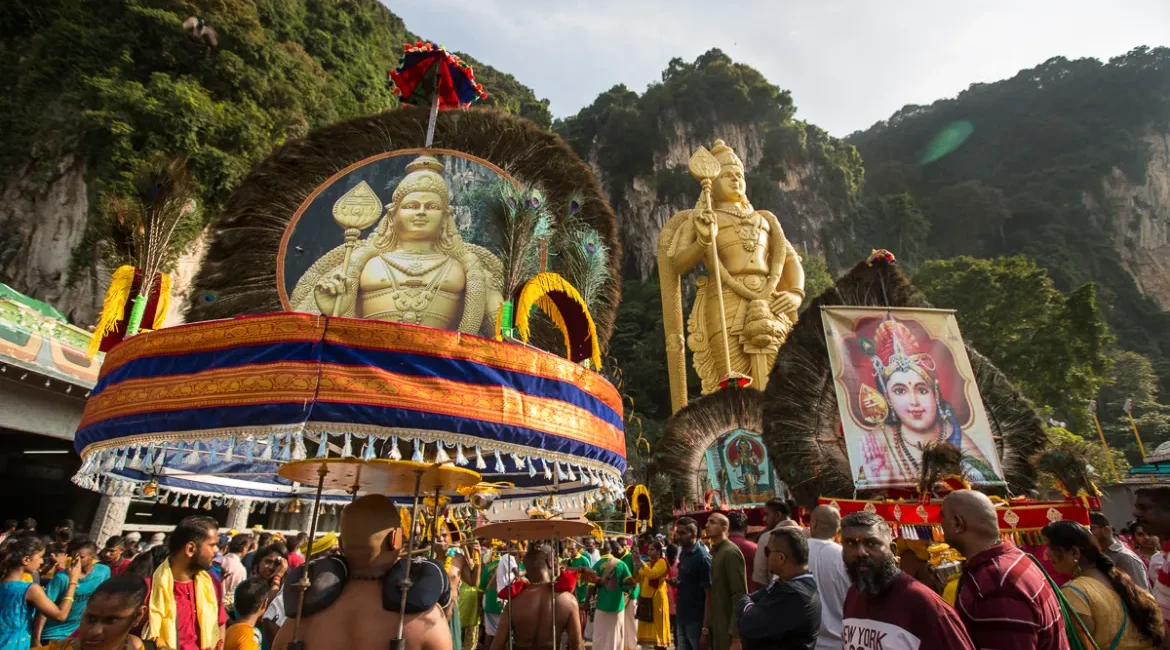
Thaipusam Batu Caves Draws Millions Ahead of Festival
Thaipusam Batu Caves celebrations are already transforming Kuala Lumpur’s iconic shrine into a vibrant gathering of faith, culture and tourism.
Thaipusam Batu Caves celebrations are already creating a powerful sense of anticipation, days before the main religious observance takes place. As one of Malaysia’s most significant Hindu festivals, Thaipusam transforms the Batu Caves temple complex into a focal point of devotion, culture and shared experience. Long before the official day arrives, the site begins to pulse with energy as devotees, tourists and vendors converge in preparation for the sacred occasion.
The atmosphere at Batu Caves reflects more than a religious gathering. It also showcases Malaysia’s identity as a multicultural society where faith, tradition and tourism intersect naturally. Visitors climbing the iconic colourful staircase are greeted by sights, sounds and rituals that offer an early glimpse into the scale of the upcoming celebration. Even in the days leading up to Thaipusam, the temple grounds already feel festive, welcoming people from diverse backgrounds who come to observe, participate or simply experience the moment.
For many international visitors, encountering Thaipusam Batu Caves for the first time is both unexpected and memorable. Tourists exploring Kuala Lumpur often stumble upon the preparations without prior knowledge of the festival, yet quickly find themselves immersed in an atmosphere unlike any other. This spontaneous exposure to living tradition leaves a strong impression and highlights Malaysia’s openness to sharing its cultural and religious heritage.
As Thaipusam approaches, the growing crowds at Batu Caves signal the importance of the festival not only to the Hindu community but also to the broader national narrative. It is a moment where spirituality, inclusivity and cultural expression come together, reinforcing why Thaipusam Batu Caves remains one of the country’s most powerful symbols of unity through diversity.
Thaipusam Batu Caves as a Sacred and Cultural Landmark
Batu Caves holds a special place in Malaysia’s religious landscape. Located just outside Kuala Lumpur, the limestone hill and its temples have long served as a center of Hindu worship. During Thaipusam, the site becomes the heart of national celebrations, drawing devotees who undertake acts of devotion as well as visitors seeking cultural insight.
The temple complex is instantly recognizable for its steep staircase painted in bright colours, leading up to the main cave shrine. In the days ahead of Thaipusam Batu Caves, this staircase becomes a constant stream of movement, as worshippers climb in prayer and visitors pause to take in the spectacle. Vendors operating in designated lanes add to the atmosphere, offering refreshments and items connected to the festival while maintaining order and accessibility.
This careful balance between devotion and public access allows Batu Caves to function both as a sacred site and a welcoming cultural landmark. It enables people of all backgrounds to observe respectfully while ensuring the sanctity of religious practices remains intact.
Early Arrivals Set the Festive Tone
The festive spirit surrounding Thaipusam Batu Caves is already evident, with devotees and tourists arriving several days before the main celebration. Early arrivals allow worshippers to prepare spiritually while giving visitors time to absorb the environment without the peak-day crowds. This gradual buildup contributes to a sense of shared anticipation and reverence.
Foreign tourists have been particularly visible during this early period, exploring the temple grounds and documenting the vibrant scenes. Many appear captivated by the colours, rituals and sense of community that define the lead-up to Thaipusam. Cameras and smartphones are common, yet the mood remains respectful as visitors observe ongoing preparations.
This early presence also highlights the festival’s growing role in religious tourism. Thaipusam Batu Caves is no longer only a local or national event. It has become a global attraction that introduces international audiences to Malaysia’s religious traditions in an authentic setting.
International Visitors Experience Thaipusam Batu Caves
For first-time visitors, witnessing Thaipusam Batu Caves can be a profound cultural encounter. Francisco Ruiz, a tourist from Madrid, Spain, described his visit as an excellent experience during his honeymoon in Malaysia. He shared that he and his wife arrived in Kuala Lumpur only days earlier and had not expected to encounter such a major religious celebration.
Ruiz explained that they initially did not know what the event was, yet quickly recognized it as something significant. The lively and welcoming atmosphere left a deep impression, turning an unplanned visit into a memorable highlight of their journey. Experiences like this illustrate how Thaipusam Batu Caves can resonate even with those unfamiliar with the festival’s religious meaning.
Such reactions reflect the power of living traditions to communicate beyond language or belief. The visual and emotional impact of the festival allows visitors to connect on a human level, fostering appreciation and respect for cultural diversity.
Reflecting Malaysia’s Multi-Racial Society
Beyond its religious importance, Thaipusam Batu Caves serves as a mirror of Malaysia’s multi-racial and multi-religious society. Visitors often remark on how people from different backgrounds come together in a shared space, united by curiosity, respect and celebration.
Ruiz noted that after visiting several locations around Kuala Lumpur, he was struck by the country’s diversity. The ability of people from various communities to coexist and participate in events like Thaipusam left a positive impression on him as a first-time visitor to Malaysia.
Similarly, Zumarni, a visitor from Bandung, Indonesia, described her experience at Batu Caves as eye-opening. She observed that Malaysians display diverse styles, backgrounds and ways of dressing, yet comfortably share the same atmosphere. For her, Thaipusam Batu Caves offered a clear and accessible glimpse into Malaysia’s social harmony.
Thaipusam Batu Caves and Community Inclusivity
The openness of Thaipusam Batu Caves is a defining characteristic of the celebration. While the festival holds deep spiritual meaning for Hindu devotees, it also welcomes observers from other faiths and cultures. This inclusivity strengthens mutual understanding and reinforces the idea that cultural events can act as bridges between communities.
Organizers and authorities play a role in maintaining this balance by managing crowd flow, vendor placement and safety measures. These efforts ensure that the festival remains accessible while preserving its religious significance. The result is an environment where devotion and observation coexist naturally.
This inclusive atmosphere contributes to the festival’s appeal as both a spiritual and social event. It allows Thaipusam Batu Caves to function as a space for reflection, learning and shared experience.
Anticipated Crowds and Festival Scale
Thaipusam, one of the major Hindu religious festivals in Malaysia, will be officially celebrated this Sunday, with Batu Caves serving as the main focal point. The scale of the event continues to grow, reflecting both population trends and increased interest from visitors.
This year, the celebration at Batu Caves is expected to attract around 2.5 million people. The projected increase compared to last year is attributed to the festival falling on a weekend and coinciding with a long public holiday. These factors allow more people to attend, whether as devotees fulfilling religious obligations or as visitors seeking cultural experiences.
The anticipated turnout underscores the importance of Thaipusam Batu Caves not only as a religious observance but also as a national event with significant social and tourism impact. As preparations continue and crowds build, the festival stands as a vivid expression of faith, unity and Malaysia’s rich cultural tapestry.
Leave a Comment